All Comments:
Feb 16, 2012 - greg dowler
Great info. What do you suggest to tell what your elevation limits are before starting the hike. I had asthma as a kid and sometimes when I get sick and want to accompany my son on BSA Philmont hike but am concerned about the lighter air and my limitations. What can I do to prepare for the elevation differences. It goes from 5k ft to 12k ft.
Feb 16, 2012 - Hiking Dude
Greg - You can't know how your body will react to lessened oxygen density at elevation.
To prepare before going, you should work your lungs and muscles through extended aerobic activity. The better your body gets at acquiring and using oxygen, the better it will perform at higher elevations. Start exercising 3 months or more before. Hiking is great prep for hiking.
A good thing about Philmont treks is that you are given ample time to acclimate. First night at Basecamp at 6400, 2nd night around 7000 or 7500, and then working up to higher campsites. I believe the highest campsite is around 10,500 on Phillips.
When you get your annual BSA physical, be sure and ask your doctor for his advice about your hope of exerting yourself at altitude - he may have suggestions or tell you not to do it.
May 18, 2013 - Lee Drapela
Awesome info. We are fixing to go to Kandersteg, Switzerland for are trip for the summer and I got pick to look up this topic for my group "how to prevent altitude sickness , tips to diminish it,and how to treat if you get it" because we are going to do a lot of hiking up there this summer. Glad that I find this website and I am going to present it to my group Sunday May 19th,2013.
May 29, 2013 - shawn yoder
Planning on hiking Pikes Peak next summer. It has been several years since I have hiked over 5000 feet. I live in Indiana so most hikes are not very high. How is it best to train my body so that when I hike high elevation it doesn't whoop me? Thanks.
Jun 11, 2013 - Deanna
Why is it that I do MUCH better to keep at a steady pace on the incline than I do if I stop and take breaks? The difference is significant or I wouldn't bother posting this question. Starting back up each time is horrid for me. Any info would be appreciated.
Jun 13, 2013 - Hiking Dude
@Deanna - Me too! Once the muscles stop moving, it's hard to get them started. Maintaining a steady, moderate pace keeps the muscles warm, lose, and active. I try to keep moving until I reach a vista, natural stopping point, or the top - even if it is just a very slow plod up the hill.
Jun 21, 2013 - rick michot
I'm looking for a hiking area, preferably in New Mexico or Colorado, where I can hike at no more than 5000 ft elevation and high temperature less than 80 degrees in July...any ideas?
Jun 21, 2013 - Hiking Dude
Rick - There is no such place. Any location under 5000 feet is too far east and south to be cool enough. Any place cool enough is cool because it is at a higher elevation.
See media.maps.com/magellan/Images/newmexicousrah.gif and media.maps.com/magellan/Images/coloradousrah.gif
Jul 01, 2013 - david browne
@shawn - I have been mountaineering in the Sierra for 40 years, and climbed many peaks over 13 or 14000. Other than general fitness and being acclimated, there is not much you can do to improve high elevation performance. It is all about how your body processes lower oxygen levels, and it varies greatly from person to person without regard to fitness. When I introduce people to high climbing, that is one of the things I really watch closely because until you have done it, you cannot predict it. Sleeping at altitude before climbing is the best way to acclimate and get best performance. Follow the suggestions in this article, which are all very valid and part of standard mountaineering lore.
Jul 07, 2013 - Charles Johnson
My son and friends are planning a summit trip to Mt Fuji end of this month. Your site has been a great source for information. Will keep you posted on his progress
Sep 09, 2013 - conor
Where can I hike in the US where I would need O's
Sep 17, 2013 - hi
i love hiking. but the highest iv ever gone is 500meters and i struggle to breath then.
Oct 19, 2013 - Catherine Wagner
I have a family member who went hunting elk high on a mountain in Colorado. He became very ill and almost died after coming down the mountain. In fact, he was on his way home when he became very ill. The ambulance attendant was able to save him. When he became stable, he was moved to a larger hospital in Denver because no doctor identify what was the cause of his near death situation. His new doctor suggested that it was most likely altitude sickness. Can a person get this violently ill after coming off the mountain several hours before the onset of the attack?
Oct 23, 2013 - Hiking Dude
@Catherine - Well, from your description, the answer to your question is "Yes". If a doctor diagnosed the cause, I'm certainly not one to say he is incorrect. I would be more interested in finding out what to do to prevent it from happening again.
Nov 01, 2013 - irfan
plz any body tell me...
How many degree of elevation are there from sea level,so that we can call it mountain.
my number is 03364307740.You can tell me at it.
Thanx.
Nov 01, 2013 - Hiking Dude
@irfan - There is no minimum height nor steepness required to call a high point a "mountain". Check out en.wikipedia.org/wiki/Mountain for some details, or look up Mount Wycheproof which is supposedly the lowest mountain in the world.
Dec 30, 2013 - Steve
I realize this is an older article, but it appears to still be in discussion. So....
Ummm, I find this article interesting and informative, but am confused by something.
Several times you advise to drink more water ("Hydrate - drinking more water helps reduce the symptoms. Drink even if you do not feel thirsty.", et al). Yet, excessive water intake can also cause symptoms similar to high-altitude sickness through dilution of electrolytes. And, edema is a condition that can be exacerbated by excessive fluid intake.
How can a person determine when dehydration is the real cause of their symptoms, without misdiagnosing the problem and contributing to their severity through excessive fluid intake?
Jun 02, 2014 - Patricia Cameron
@Steve
I am an EMT who recently started hiking 14ers here in Colorado, where I live. It is almost impossible to get too many fluids in these circumstances. 1.) You body requires a higher amount and so you drinking more is for these needs. 2.) It takes a LOT of water to create an electrolyte imbalance. If it still really concerns you, you can bring along ONE athletic drink (sugar will makes things worse) or you can try the salt pills in some outdoor stores such as REI. You can recognize electrolyte imbalances by severe cramps in the muscles, like your thighs and your calves. Popping these before strenuous activity (with plenty of water) and another if muscle pain occurs (with plenty of water) should do you well.
Jun 02, 2014 - Hiking Dude
@Steve - Simplest way to check on dehydration is comparing the person's water bottle with others to see if he's been drinking. And, ask when he last urinated and what the color was - darker urine indicates more water is needed.
@Patricia - Salt tablets are rarely a recommended way to balance the sodium levels in the body. It's better to snack on food throughout the hike since that stimulates thirst, provides energy, and reduces the chances of taking in too much unneeded salt.
Jun 20, 2014 - Chao
Hi,
I m 48yrs old and had hypertension.
I managed to stabilize the systolic and diastolic to an acceptable level,would you recommend for me to make a climb to an elevation of 14000ft?
Jun 21, 2014 - Hiking Dude
@Chao - No, the only thing I would recommend is that you ask a doctor about medical conditions and what activities would be safe. I'm a hiker, not a doctor!
Jul 10, 2014 - gary b jorgensen
HELP ! PLEASE advise of a recommended oxygen concentrator to allow me to camp at 13,000 ft and accend to 14,500-15,000. I really need smallest weight available equipment. I am 73 years old, in fair shape and have COPD/ sleep apnea. This hunt is the top of my bucket list but my bride is not a happy camper. You "big boys and/or gals" that have knowledge of my requirements will be in my gratitude to offer your input. I will have limited access in camp (13,000 ft) to generator power until around 10:00 PM and have 12 volt access until climb (stalk) is required. PLEASE,PLEASE suggest an oxygen concentrator that fits my needs without being burdensome weight wise. Going to Tajikistan so must take all survival equipmemnt with me. Thanks, in advance, for ANY help you may provide. Gary B Jorgensen
Jul 11, 2014 - Hiking Dude
@Gary - If you google for "portable oxygen concentrator" there are 300,000 results with a huge range of weights, features, and costs.
You should ask a doctor for recommendations. Maybe someone else can go out on a limb with a recommendation, but I'm a hiker, not a doctor!
Jul 18, 2014 - Dan
Hello,
I was wondering if you or anyone has climbed Mauna Kea in Hawaii? My first time hiking anything this high. I am in good shape , been doing high interval training since January. Any advice on this particular hike and what to pack? Thanks
Jul 20, 2014 - Hiking Dude
@Dan - Not me. But, at 13,800 feet, it's certainly high enough for you to experience altitude sickness. Looks to me like water will be a concern and absolutely no protection from weather above treeline. Good luck - sounds like an adventure!
Jul 30, 2014 - daniel
Thanks Hiking Dude. making my backpack list at this very moment. It will for sure be an adventure, planning on bringing a ton of water and some good hearty snacks. I will keep you posted on how it goes.
Nov 14, 2014 - Kendra Kirby
I have been trying to find information on descending and acclimation your body. I'm not a climber but think there is a spiritual/psychological parallel when coming off a very powerful "mountaintop" experience. Any tips on what to do as you transition back into the groundatabase (i.e. real life,for my purposes). Thanks.
Nov 15, 2014 - Hiking Dude
@Kendra - There is no physical need to acclimate when descending from a high elevation hike. As far as "spiritual" - well that's really up to the individual.
Many long-distance hikers that are out on the trail for months do have concerns about re-entering society, but I know of none that purposely plan for that event.
Jan 17, 2015 - Jacki
What happened to me? Hiked Pikes Peak a couple of years ago for my Bucket List. When we reached the top, I was fine until I sat down in the booth to eat. My jaw sort of 'locked up', my hands curled and I basically had a hard time moving anything. Had to have help to walk to the Cog train for the ride down and even after back down and home, it took a couple of hours until I was back to normal. Assuming it was some sort of altitude sickness, of course, but it doesn't seem to match any of the altitude sickness descriptions. I can hike the Manitou Incline with no problems like that. Must have been something about not enough oxygen getting to my muscles. More careful now when I hike. Never want that to happen ever again. Way too scarey.
Mar 05, 2015 - Jane
We will be hiking the Salkantay Trail (Machu Picchu) in a few months. We live at sea level. Will 4 days at almost 11,000 feet in Cusco be sufficient for acclimatization?
Mar 05, 2015 - Hiking Dude
@Jane - There no absolute answer to "How much acclimatization is needed?" Some people are barely effected while others get hit hard, and the same person may be effected differently on different trips.
But, going from 0ft to 11,000ft all at once is an awful big jump. A day at 8K, then 9K, then 10K, then 11K would be a better plan, but I don't suppose you can do that.
I would just relax the first day at 11K, then a few short walks the 2nd day to see how it goes. If all is well, then I'd use day 3 and 4 to walk around with packs.
Sounds like a terrific trek!
Mar 24, 2015 - Debra
@Jane - We will also be hiking the Salkantay in a few months and we also live at sea level. You might want to consider a night or two in the Sacred Valley first, if you can, instead of four nights in Cusco. The towns are lower, so it would provide a bit of gradual acclimatization. Several also have Inca ruins. We, for example, are flying into Cusco but then going immediately to Ollaytantambo for our first night and day. It's a little higher than 9K. So, 24 hours or so isn't a lot but I figured it was better than leaping from sea level to 11,200 feet. I'm no expert, of course, but this was a suggestion in a guidebook and I thought it was a good one. Have a great time - see you on the trail!! :)
Apr 01, 2015 - Bernard
Good day Hiking Dude.
Please give your best opinion.
I'm early 60,s, can run 5kms fairly well, of average fitness level, not too good at cardio, but will do required training for Mt. Kilimanjaro over 8 month period. What are my odds of reaching 19,000 ft in 6 days? (no special breathing equipment)
From what I read above,...I am a little skeptical!?!?
Thanks!!
Apr 05, 2015 - Jessica
How much is the maximum one should hike per day? I will be hikinh in Apolobamba and the people I will be following will be going 1000m per day for the first 3-4 days. I was told that I shouldn't go up more than 300m for the first days.
Apr 06, 2015 - Hiking Dude
@Bernard - It looks like that is the standard climb length offered by guide services. Sounds like you are preparing well before and understand it will be a challenge - so I'd say your odds are very good.
@Jessica - It's a good idea to gain altitude slowly so you acclimate to the air and generally 1000-1500 feet per day reduces the probability of problems. Someone gaining 1000m per day for 4 days just gained 12000feet - that's a lot.
Apr 23, 2015 - Rob
Planning a climb on Kilimanjaro and trying to determine the right of number of days for the climb. I'm a triathlete and have skied/ridge hiked at 7000' -10000' on many occasions without problems. I live at elevation 750'. Looking for a challenge, but want to avoid altitude sickness, so any advice on how many days I should plan would be a great help.
Jun 04, 2015 - Meg
I'm an industrial design student and I've been tasked with redesigning an oxygen mask for
mountaineering, I would really appreciate it if anyone that has experience using oxygen
masks while climbing could take my survey! Your insight is incredibly valuable and would
help so much! Thank you! Here is the link, its completely anonymous and you don't have to
sign up to take it or anything: www.instant.ly/s/b1XXS Thanks again!
Jul 08, 2015 - Andrea
Planning a trip to Colorado with my family including kids ages 10, 12, and 14. Kids are all
in excellent shape (play competitive soccer year round) and experienced hikers (extensive
hiking in Glacier NP last summer and in the Canadian Rockies the summer before.) But we
have not hiked at elevations above 10k previously, and we do not live at elevation. We will
be flying into Denver and then doing some hiking in Rocky Mountain NP and then heading
to Breck and maybe doing our first 14er (Quandary) later in the week. How long do we have
to wait to acclimatize ourselves? If we fly into Denver on a Sunday and do some smaller
hikes on Monday, could we do Mount Ida on Tuesday and maybe Quandary on Thursday?
Jul 19, 2015 - Hiking Dude
@Andrea - Altitude affects people differently, so there is no set
amount of acclimatization required. It's important to stay alert
for symptoms and have an alternate plan in case anyone starts
having trouble.
Your plan sounds fine to me, especially since you are doing day
hikes (rather than backpacking) and can easily drive to lower
elevations if problems persist.
Jul 21, 2015 - Travis
I've been driving from sea level to the trailhead, then
climbing to 14,500 feet and back in the same day. Every time
I do it, I can experience the Acute Mountain Sickness
symptoms somewhat above 11,500 feet. It takes me about eight
hours to transition from sea level to 14,500 feet. To limit
these symptoms, I think it's very important to eat and drink
salt added food and water, and cover your entire skin with
clothing and sunscreen to protect from sun.
Jul 22, 2015 - DutchEagle
Altitude canceled my plans. I'm in a very good shape, work out a lot and have my 10.000 steps in every day. I was in the Marines and know what it takes to go distances. However as a Dutch guy I always lived at sea level. (I now live in Minnesota USA) Our vacation last September (2015) in Colorado with the dream of taking a 14er was smashed to pieces because I cold not get acclimated to the altitude. We stayed in Snowmass village at about 8200 feet (2500 meters). Driving and walking around places went ok but as soon as I started hiking a path up or even down it was a difficult task. Nevertheless we enjoyed Colorado but did not hike at all. Just to show a perfect shape and condition is not a guarantee you will succeed at higher altitude.
Jul 27, 2015 - steve
Great column and accompanying questions/answers! My
question is "how long does a degree of adjustment to
altitude last for the next trip, after coming down to sea
level?" This is an issue that comes up for me as a regular
high altitude hiker, but especially so right now because I
am trekking the Huayhuash in Peru for 11 days from 4200-
5100 meters starting Sept 1st. July 4 I spent one night at
8000' and two nights at 10,700', then late July, two nights
at 6200', and 3 nights at 9000', now in Aug I will be
spending various(5 or 6) nights in the 5000'-7000' range.
Upon in arrival in Peru I will be 4 nights in Huaraz at
9800', then on up to the trek. I have prior experience in
Peru and Nepal, done ok, but still, I hope I will retain
some adjustment to altitude for this trip, wonder if I
should go try to squeeze a few other highish nights in this
month. But aside from this specific trip, this is a
practical and nerdy curiosity to me. (I apologize if this
is too wordy) thanks! Steve
Aug 03, 2015 - Patrick Herlihy
A recent trend is sports performance boosting is canned oxygen. It seems like this would be a worthwhile thing to throw in the pack as a treatment for AMS; should symptoms occur, take some deep breaths of pure oxygen and rest for a few minutes, hopefully continuing on at an appropriate pace. Anything wrong with this plan?
Aug 03, 2015 - Hiking Dude
@Patrick - It is not a recommended treatment. Since it's just a
natural thing (like bottled water), I doubt it would do any further
harm, but I expect it would be a very temporary relief. The extra
weight of the can would be a pain to add to your pack.
Aug 17, 2015 - Lisa
I just finished hiking at Matchu Piccu and Puma Marka in Peru. I've been home in the Midwest for a week now but my lungs still feel as if they are not fully recovered. Any suggestions?
Aug 17, 2015 - Hiking Dude
@Lisa - Yeah, go visit your doctor if you're concerned.
I've never
had anyone complain about lung problems a day, let alone a week,
after our week-long backpacking trips well over 10,000 feet. You
may have developed some HAPE-like problem that has become
persistent, but that's just a guess.
Sep 05, 2015 - Al
I moved to NC from Florida about 8 years ago. I have to take atarax every 2 days just to live here or I start getting dizzy, nauseous, etc. The problem is it's only 1300 feet above sea level here? Does anyone know why I'd get elevation sickness at such a low elevation? My family is wanting to move to an area in NC thats 3000 elevation but twice in the past (8 years ago) when I tried to spend the night in Franklin NC (2250 feet above sea level), I got sick and had to leave? Does anyone know what to do about that, I want to move but am not sure if the atarax will work at the higher elevation my family wants to move to. Thanks for any help anyone can give.
Sep 18, 2015 - Mark - Pensacola
Jacki on Pikes peak
I'm not a Dr., but I was a Paramedic & Navy Corpsman. Plus, lived in Wyoming. The jaw and hands problem is similar to symptoms I've seen and experienced. Not at altitude, but after extreme physical activity. It can be related to a lack of calcium in the bloodstream. Typical treatment, eat a bunch of Tums.If that's the problem, it works fast. Also seen it in people who have undergone procedures where IV drugs have bonded with the calcium in the blood temporarily rendering it unavailable to the muscles. "Heat cramps" are often talked about, but little ever really said about cause and treatment. We all hear about too much salt, but never about geting enough sodium, potassium, calcium and other trace electrolytes. If that is the problem, Tums will help. If not, they are not likely to cause harm.
Nov 29, 2015 - Roger Lockwood
I saw lots of altitude sickness at Glacier Point in
Yosemite N.P. People would come from either the valley
floor at around 4,000 to the point which is around 8,000
feet. They were only walking from the parking lot to the
point and get sick. I am going from Sarasota, FL (alt. 14
feet ASL) to work as a campground caretaker in Medicine
Bow, WY (Alt. 12,000+ or -) I am concerned. I like the
article, especially the acclimatization steps before
hiking. I am 60 years old, not good aerobic shape, so I
plan to be very careful.
Jan 01, 2016 - mark
Why no advice re taking some bottled air/oxygen for use as needed?
Apr 04, 2016 - Nanda Mehta
This is an excellent resource! Thank you, hiking dude! I'm getting
ready to climb Mt. Kilimanjaro in December but training on domestic
high altitude hikes so that I'm more prepared. If anyone on this
blog has done the Kili climb, would love to hear about your
experience!
Apr 04, 2016 - Nanda Mehta
@ Rob (April 23, 2015) Did you accomplish your goal of the Kili
climb? If so, please post your experience, thanks!
Aug 12, 2016 - Jim
Just returned from a 3 week trip across the northwest US...SantaFe,NM, Durango CO area, Moab UT, Sawtooths in ID, Walla-Whitmans in OR and Mt Rainier, WA. I'm 63 and have COPD that seems pretty well controlled at sea level.In the 6 months leading up to the trip did many sea level day hikes of 3-6 miles, as well as dropped 35 lbs. dieting (now 5-10, 175). Nonetheless, I had a lot of trouble with uphill work at altitude, even though we adjusted our plans to include only hikes I could do in 3-4 hours with max 600-800 ft elevation climbs. Not AMS, just difficutly breathing and having to go at at snails pace. Part of the reason for the trip was to find out what exactly I can and can't do. Would love to be able to extend to 1500 ft climbs of 4-6 hours roundtrip.
Does anyone have any suggestions for how I might better prepare the next time? Afraid I've caught the hiking bug again after many years away from it. And the western US is SPECTACULAR.
Aug 12, 2016 - Hiking Dude
@Jim - Congrats on knocking off some excess weight. Difficulty
breathing 8,000ft or so doesn't mean there's anything to fix -
it's just the way it is. Reducing your pace is the right thing
to do.
Muscles in a 60+ body just aren't what they were 20 or 30
years ago. If the "trouble" you had going uphill was just
fatigue and being out of breath, that should reduce over time if
you continue hiking. But, it takes longer as we get older -
that's life. On my A.T. section hike last year, I had to rest
after gaining about 400ft in elevation, but after a couple
weeks, I could gain over 1300ft without stopping. That wasn't
altitude causing problems, but was just muscle fatigue.
There
are masks you can wear to reduce air intake while practice
hiking which are supposed to help simulate higher altitude, but
I've not used them. Other than that, just practice hiking on
steep local terrain, for longer lengths, at a bit faster pace,
and with a heavier pack will help muscles and lungs.
Oct 09, 2016 - robert dowling
last year climed kilimanjaro with a 7 stone weight on my
back,reached first peak gilmans point.my next challenge is
to pull this weight on a two wheeled cart around the salt
flats desert Bolvia,some 600 k a two month challenge.its
12000 ft above sea level,I live by the beach Ireland.total
pay load will be in excess of 75 kg my body weight.I hope
to cover 2.5 k per hour max x 7 hours x 6 days per
week.
any advice here would be most welcomed,rob.oh my
first challenge was amazon river with the weight I sailed
some 500k solo.this weight is a bathtub,,,,long story
Oct 17, 2016 - Hiking Dude
@robert - Advice? Well, you won't listen to me, but "lose the
bathtub." I've read about your challenges and I expect you'll
do just fine since you'll have wheels and flat terrain - nothing
like the mountain trail.
You might want to hang out and walk
around for a day or two at 8000 and 10000 feet, and then two
days to get used to 12000 feet before you actually start lugging
the weight around. Keep checking yourself for signs of high
altitude sickness and be prepared to bail out to a lower
elevation, especially during the first week or so until you get
a bit acclimated to the thinner air.
Dec 31, 2016 - robert dowling
thanks hiking Dude,yes I dont believe I will dump my
bathtub,however destinity
has played a hand,,,she went
missing in Tanzania,a year now all my plans are on hold,good
news is i have walked some 3000 miles in 9 months and last
few months weight training so feeling in top shape for a old
feller !
we shall unite in time and ill be on my way .thanks
for the sound advise..rob Ireland
Jul 07, 2017 - Darren Poulton
I am looking for some advice on altitude. I am flying from Delhi in India which has an elevation of
just 700 feet to Manali which has an elevation of 8000 feet.
From there we are visiting two more
places, Kaza 12000ft, then Key Monastery 13667ft.
Most of this will be done in planes and cars but
the last kilometre to the monastery is a steep hike.
Is there any benefit in staying in Manali to
acclimatise or should we head straight from the airport to Kasa.
How long should we stay in Kasa
before heading on?
This is all new to me and I would be grateful of your experience. The total trip
is 8 days.
Jul 07, 2017 - Hiking Dude
@Darren - Taking it slow at elevation is always a good idea. If
you can spend a day in Manali, that would let your body acclimatize
some. Spending a day in Kasa would also be helpful.
If you are
just riding around in cars, rather than walking, then adjusting to
the altitude is not so critical. Just take that walk to the
monastery nice and slow.
Aug 07, 2017 - Jeff Curran
I am getting ready to leave for a hiking trip in Glacier
National Park. After my last hiking trip in the Tetons, I was
fine the whole trip. When I returned to Ohio, my whole body
showed signs of swelling. My wife freaked out and went to the
ER and they said everything checked out fine and to wait it out.
Sure enough, I eliminated about 8 pounds of water over the next
day and was back to normal. Not sure why this happened but
wondering if there is something I should do different on this
trip to prevent the same thing. I am in my early 50s and live
in Ohio. Thanks!
Aug 10, 2017 - Don
Not overweight but also not very fit. Went from 1,000 feet home
up to 9,000 feet overnight roadside campsite, then 10,00 feet
trailhead in Colorado on a hike. First camp up to 11,500.
Besides some expected shortness of breath, I was appalled at how
lethargic and sluggish I felt. Didn't want to do much more than
a few short walks around the lake near campsite. Ended up
cutting short the trip, even though no other symptoms. On lower
elevation hikes I do fine, but I'm wondering if increased muscle
and cardio fitness could lessen lethargy and sluggishness, or am
I going to just have to slow down and deal with this in the
future. Not sure I can budget acclimation time at lower
elevations before getting up to the 11,000 foot beauty I'm
seeking.
Oct 27, 2018 - Ali Eski
This is very useful site as I plan to take Inca trial from
California which is at sea level. Thanks much. I am just
repeating a question and answer by hiking dude, as I found that
answer most hilarious (to me), but also very correct and to
point, thanks again.
Hi, I had hypertension. I managed to
stabilize the systolic and diastolic to an acceptable level,
would you recommend for me to make a climb to an elevation of
14000 ft?
Jun 21, 2014 - Hiking Dude
No, the only thing I would
recommend is that you ask a doctor about medical conditions and
what activities would be safe. I'm a hiker, not a doctor!
Nov 02, 2018 - alex
Hello Im planning to climb mount fuji. Im wondering what to pack in the bags and some good
helpful tips?
Nov 06, 2018 - Hiking Dude
@alex - Good for you! It's just a long dayhike (12-16 hours) and
there are services along the 4 routes to the top, so you don't need
to carry much. Snacks and water, plus bad weather gear, sun
protection, and a first aid kit. No tips, except to be prepared to
meet hundreds of people on the trail.
Nov 28, 2018 - Mark
If you live at higher altitude (3,000 to 6,000 feet) you're more likely to handle high altitude hiking better. I've lived in Utah most of my life at around 4,500 feet, and I don't normally notice any altitude issues until I'm well above 12,000 feet (3,650 meters).
Apr 25, 2020 - Michael
Nothing to ask. Just wanted to say "Thanks!" for the great article.
Cheers!
Dec 29, 2022 - RN
Hi I am just recovering from HAPE that I got when climbing up
Cotopaxi in Ecuador. I am planning a multi day Boy Scout hike in
Philmont, NM. Given that I have just had HAPE, I am at a larger risk
factor for getting it again at high altitudes. Any recommendations for
the Philmont hike?
Dec 29, 2022 - Hiking Dude
If you got HAPE before, there's around a 60% chance you'll get
it again in the same environment. So, if you got it at
elevations lower than what you'll be hiking at Philmont,
there's a good chance.
The treks at Philmont are laid out so
acclimatization rates are maintained with limited elevation
gain each day, and all hiking is under 12,000 feet except Baldy
summit. Most campsites are 6,000 to 10,000 feet with just a
few exceptions above that. So, the general elevation is lower
than where HAPE typically occurs.
There are many medicine
choices to help prevent altitude illnesses, some over the
counter and some prescribed.
If it was me, I would take
direction from my doctor.
Ask a Question


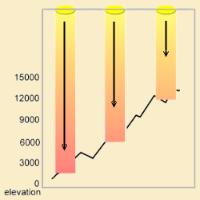
 As you expand your hiking adventures, you'll probably be driven to hike up higher and higher mountains. At some point, it becomes mountaineering, but there are many peaks over 14,000 feet that have trails all the way to the top. Colorado has many 14,000+ peaks that people make a goal of summiting.
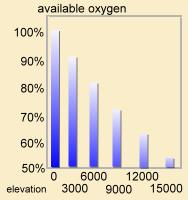
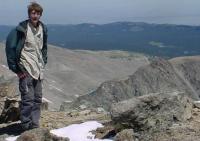 Everyone needs to breathe more when they are at altitude. But, some people become sick when they hike too high. It just happens.
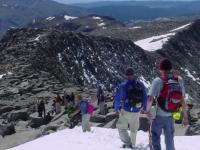 About 75% of people that hike over 10,000 feet will experience some mild AMS symptoms. Hikers can continue on with mild symptoms, but if they do not subside or they get worse, then corrective action is required. The problem with AMS is that its symptoms are similar to other common hiking problems such as dehydration, fatigue, and eating bad food.
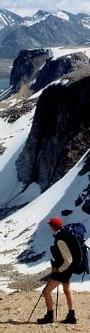 High Altitude Pulmonary Edema is excess fluid in the lungs which further reduces oxygen exchange from air to your body. The level of oxygen diminishes which can lead to impaired thinking and ultimately death. HAPE symptoms include shortness of breath while at rest, feeling of tightness in the chest, weakness, feeling of suffocating, persistent cough, and fatigue. The person may also cough up watery fluid.
 Hot Weather Hiking
 Cold Weather Hiking
Follow Me
Recent Comments