

Hiking Boots

All About Boots
There's a lot involved in figuring out what boot to get and knowing if you made a good choice. We'll start off listing the parts of boots, then various types of boots available, then discuss how to choose one, and finally a few pointers on using and caring for your boots.
Anatomy of a Hiking Boot
Most all footwear has similar components put together to offer protection, support, and style. Some won't have all of these, but these are the main parts to keep in mind when looking at boots:
- Sole - the bottom of the boot, responsible for gripping the ground, absorbing shock, and protecting from sharp objects. Soles should have deep patterns made of tough rubber so rubber highpoints will grip on hard, slippery surfaces while the entire sole will sink into softer surfaces, increasing the grip there. Soles need to be flexible to allow a natural gait, but also stiff enough to support the foot.
- Upper - everything above the sole. It's job is to snugly hold the sole to the foot and to protect the foot from scratches, twists, and pounding. It should repel water and allow perspiration to breathe out. The upper should be firmly and permanently attached to the sole - this is called the welt.
- Inner - Padding and linings are placed inside boots to increase comfort and help with moisture protection. Gore-Tex is a common water liner. Padding also provides insulation and reduces some pressure points. Padding in the toe or heel of your boot is a bad idea because it will quickly compress and change the fit of the boot.
- Insole - your foot stands on the insole and it should fit to your foot exactly for proper support. Foam insoles will quickly compress and lose support. Insoles with good arch support are important.
- Tongue - the cover for the opening where you insert your foot. A tongue allows you to adjust the snug fit of the boot.
- Scree Collar - around your ankle, there needs to be padding that keeps loose dirt, sand, pebbles out of your boot. This should fit snugly and can be helped along by wearing a pair of gaiters.
-
Lacing
- laces are used to tighten the fit of the boot. There are many types of eyelets in use:
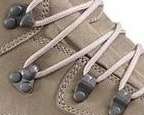
- Punched eyelets - usually reinforced with metal grommets, these are holes punched in the upper material. Tend to rip out.
- Webbing - loops of fabric, tend to wear out.
- D-rings - metal loops riveted to upper material. Very durable, but tend to cause pressure points.
- Hooks - open-backed riveted to the upper material. Often used for the top 3 or 4 eyelets.
Types of Boots
There is a wide range of footwear for hiking, ranging from going barefoot to mountaineering boots. The type of boot you require all depends on the type of hiking you are going to do, how much support you want, and how much you can pay - paying more does not necessarily mean getting a better boot. You may be better off with a less expensive, lighter boot for your hiking style.
I owned a pair of Merrell backpacking boots that fit me extremely well and have given great support for four summers over about 1,000 miles of mountain backpacking. But, you can find similar styles of boot in higher and lower qualities from the various manufacturers - Asolo, Montrail, Salomon, Timberland, Vasque.
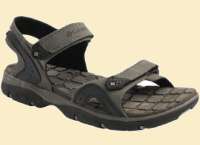 Hiking Sandal - You can safely hike in sandals with sturdy tread and strong straps. A toe guard is a good safety feature to minimize toe stubbing - ouch!
Sandals are light so your legs work less to lift and step, but they have virtually no support for your foot. They are dry and comfortable for hiking on groomed trails with a light day pack, but not practical for any off-trail hiking or extended treks. It is a good idea to have a pair along on treks to use as a camp shoe and for water crossings.
Find a sandal with molded arch supports, sewn rather than glued straps, comfortable footpad, and tough sole. The pictured style costs around $30, but I got mine on sale for $14.
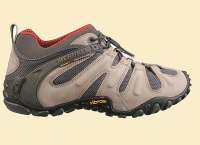 Hiking Shoe - Shoes provide comfort and easy hiking by using light materials such as nylon and suede enforced with some leather. They are flexible and require minimum break-in time. You could probably buy a pair and start hiking in them the next day, after just wearing them around for a day. This shoe costs around $50, but there is a huge range in price and quality available. Unfortunately, this style has become popular for normal wear so there are many shoes that appear to be hiking shoes but have no support - check the specs.
Real hiking shoes have support for your arches and feet. Their lower ankle cut provides no protection around the ankle area from brush and other scratches. I have been hiking in low-cut shoes rather than boots almost entirely since 2012. I still wear boots in rough, mountain terrain, but shoes when long distance hiking. I've found that an extremely inexpensive Ozark Trail show from Walmart is comfortable for my feet and lasts about as long as other, much more expensive, brands.
The sport of Trail Running is pretty popular and there are specific shoes for trail running that tend to be quite a bit more expensive. They include extra padding, a bit more support, and tougher soles. They cost more, but can be used for normal hiking too.
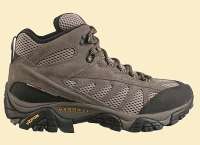 Mid-weight Boot - This is the boot that most hikers and backpackers will use. They are appropriate for on-trail and off-trail terrain that is not extremely rugged. Typically, mid-weight boots are made of synthetic material with leather enforcement sections like the one pictured. You should expect to spend a week of walking to break in your boots; some require less time, depending on their stiffness. If you are not used to above ankle boots, you'll need to spend extra time getting comfortable to the feel.
No matter what trails you plan to hike, a mid-weight boot will be a good choice. If you decide to go on extended treks, their extra foot stiffness will help out. They also work fine on shorter hikes and give you the option to tackle more difficult routes if you want. The boot pictures costs around $80, but my pair of Merrells cost $140 and I got on sale for $95.
Mid-weight hiking boots will probably be advertised as waterproof, probably with a lining of Gore-Tex. The extra boot weight over using shoes means you will be working harder with these boots, but the extra foot protection is your reward.
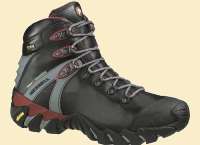 Heavy Boot - If your lofty plans include boulder hopping and off-trail blazing, then a heavier boot may be in order. These boots bridge the gap between trail hiking and mountaineering and some have features of mountaineering boots, such as crampon lips. Heavy hiking boots offer maximum support against twists and foot injuries, plus being water resistant and breathable through the use of Gore-Tex liners. For general hiking, they are overkill, but for treks over rough trails with lots of elevation change, they may be a good choice. This sample pair runs about $150.
The construction of heavy off-trail boots makes them more sturdy, but also more expensive and not so comfortable. You will need to spend a good amount of time breaking in your new boots and getting your feet used to hiking/climbing in them. They weigh more so you will be working harder for each step you take.
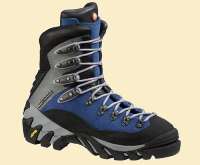 Mountaineering Boot - Don't even think about getting a pair of these for hiking. :-) Mountaineering boots are intended for climbing mountains and are closer to ski boots than hiking boots. They offer extreme support for feet and ankles with attachment points for crampons for hiking on ice. Usually made with a hard outer shell, inflexible sole, and extra insulation, these boots would kill you on a day-hike. Using these boots, each step is deliberate and calculated - you climb up the mountain, you climb down the mountain. The boot here costs around $275.
Choosing a Boot
When it comes down to choosing a boot, the general considerations you need to make include:
- Boot Weight - the lighter boot, the less work for your legs. Get as light as you can and still keep the support you want.
- Water - You want materials that will let perspiration escape but not let water come in. Water in your boot is uncomfortable and causes smelly feet and blisters. Or, mesh shoe material allows water to drain and evaporate out so the shoe dries relatively quickly.
- Arch Support - keeping your foot comfortable and supported under load is important. If the boot lets your foot flatten out, it will result in a painful hike.
- Protection from Injury - stubbing your toe and twisting your ankle are the two big ones. Ankle support is more important the rougher the terrain becomes. For most trail hiking, ankle support is not a concern.
- Load Support - when you carry a load, the boot should protect your foot from bending too far forward or backward while still allowing an adequate range of motion.
From my descriptions of the different hiking boot styles, you probably already know that I recommend a mid-weight boot for beginner hikers. It is flexible and can be used for easy day hikes and extended backpacking treks. I also recommend taking along a pair of light sandals on any multi-day hikes so you can air out your boots and let your feet relax when not actually hiking. This is important for drying out your boots for the next long hike.
For basic day hikes, and long distance hiking, a hiking shoe is also a good choice. A shoe might be a bit more comfortable and you could wear it for every day walking. As long as you are staying on trails that are not too rough, a shoe is a good bet.
- Type of Hiking - consider the terrain you will be walking on, the weather you will encounter, the length of your hikes, and the weight of your pack. A sturdier boot with more support is required for rougher treks with a heavier load. A lighter shoe works fine for good trails and lighter loads.
- Skill Level - more support is a good idea for a new hiker. Someone in good hiking shape with legs, ankles, and feet accustomed to the muscle use and pounding may use a lighter boot where a new hiker should have a sturdier boot until he improves his abilities and strength. Think ahead to where you plan to take your skill level. If you are starting on easy, flat trails but plan to work up to more difficult terrain later in the summer or next year, then plan ahead and get appropriate footwear now.
- Boot Fit - This is the hard part about getting any footwear, as I'm sure you know. Your foot and boot will mold to each other over time, so some tips to getting that fit correct might help:
- Ignore shoe sizes. If you wear a 9, you may go to 10 or 8 in a hiking boot. Concentrate on the fit of the boot, not the supposed size of it.
- Wear your exact hiking socks when trying on boots. Use a sock liner if that is what you plan on hiking in.
- Boots should feel snug all over, but not tight. There should be no points of pressure.
- Shop for boots in the afternoon or evening. Walk around the mall in your shoes for 10 minutes before trying on the boots. Your feet change in shape through the day and this will help prevent buying boots that seemed to fit.
- Unfasten the laces and put your foot in the boot. While standing, push your foot forward until your toes reach the toe of the boot. There should be just enough room for you to slip your index finger between your heel and the back of the boot. Check both feet.
- Move you foot back to the rear of the boot and lace the boots up snugly. Walk around a bit to see how the boots feel.
- Your toes should not touch the front of the boot. If you kick your toe into the floor, the front of your ankle and top of your foot should take the force - your toes should not hit the toe of the boot. If your toes hit, that means you will be constantly pounding your toes when hiking downhill and it will become painful.
- Your heel should not slip in the boot. Hold the heel of the boot down with the toe of your other boot and try to lift your heel. If it moves up and down more than a quarter inch or so, then when you hike you run the risk of rubbing a nice big blister on that heel. You may try a smaller size or look for a different style with a different heel cup and arch form.
- Boot Quality - I'm not really much of a brand-name kind of guy. I also have this suspicion that the sales guy is going to push me to the most expensive boot instead of the best boot for my needs. I've had Nikes that disintegrated and I've had Wal-Mart items that never wear out. But, in general, you pay more for higher quality, I'll go along with that. In the world of hiking boots, there are some major players and they have tough customers. Turn out a poor product and folks will try a different brand the next time around since there are so many to choose from.
When checking out boots, take some time to examine the boots closely. Some may look really cool, but fall apart after 100 miles of hiking. Some of the particulars to check include:- Stitching - look for missed stitches, loose threads, neatness.
- Welt - where the upper and sole are connected. should be tight and no spots that look weak or loose.
- Thin Spots - even leather thickness, no abrasions, no cuts or uneven edges.
- Tread - thick, tough, and solid. not spongy and soft to wear out in a few weeks.
- Lacing - braided nylon rather than flat shoe laces. Check eyelets for strength and durability.
- Smell - seriously! I smelled a pair and it was like dead fish. It should have a clean, new smell.
Caring For Your Boots
Depending on the materials used in the construction of your boot, you will need to use different products to care for them. Make sure you ask the salesperson or manufacturer for proper care procedures.
- Break in your new boots. Lighter boots need little break-in, but make sure you wear them around the neighborhood at least a few times, until your feet feel comfortable in them.
- Store your boots in a cool, dry place. Put crumpled up newspaper in them to absorb moisture. Take them out and wear them every month or so just to keep them soft and in the correct shape.
- Make sure you have new, strong laces in your boots before starting a hike. Nothing like having a broken lace out there. Just tie a knot and carry on if it does happen.
- Never dry your boots by a fire or other source of high heat. High heat may destroy glue, ruins leather, and makes you spend more on another pair. Dry them gradually in warm, dry air.
- After a trip, clean and thoroughly dry your boots. Treat them with the recommended conditioner, usually oil or wax for leather and silicon-based for synthetic materials.
- Before a trip, coat them again with conditioner and coat the seams to improve water resistance.
 Selecting Hiking Socks
 Considering Hiking Clothes
All Comments:
Jul 24, 2012 - Stephen Eastop
Jan 21, 2013 - shirleydean
Jan 22, 2013 - Hiking Dude
Feb 14, 2013 - ShirleyM.
Mar 20, 2013 - Jeffrey S
Sep 16, 2013 - Trish Z
Mar 28, 2014 - Jesse
May 04, 2014 - Bobbi
May 05, 2014 - Hiking Dude
Jun 05, 2014 - Tommi
Jun 06, 2014 - Hiking Dude
Jun 29, 2014 - Angela
Jun 30, 2014 - Hiking Dude
Aug 11, 2014 - Ken
Aug 11, 2014 - Hiking Dude
Aug 11, 2014 - Ken
Aug 19, 2014 - Bart G
Aug 21, 2014 - Hiking Dude
Aug 28, 2014 - Susan V.
Aug 28, 2014 - Susan V.
Aug 28, 2014 - Hiking Dude
Oct 19, 2014 - John
Oct 26, 2014 - Maria
Nov 02, 2014 - Hiking Dude
Dec 03, 2014 - chris jenkins
Dec 10, 2014 - Zarem
Dec 26, 2014 - Debbie
Dec 27, 2014 - Stevie
Dec 30, 2014 - Hiking Dude
Mar 31, 2015 - TG
Mar 31, 2015 - Hiking Dude
Jun 02, 2015 - Vicky
Sep 27, 2016 - karen
Sep 27, 2016 - Hiking Dude
It sounds like he is already coping with his injury and it is not keeping him from running. I expect the same care while hiking would work just as well for him.
REI, Cabela's, Gander Mountain, and many other outdoors gear stores carry many good brands and styles of boot and shoe - Keen, Merrell, Vasque, Lowa, Salomon, Teva, Patagonia, Scarpa, ... - it's a seemingly infinite list. What fits my foot and is comfortable to me might not be the same for someone else. The only way he can get a new shoe that works for him is to try some on until he finds one.
Feb 07, 2017 - fred wood
Feb 08, 2017 - Hiking Dude
1. Lace the shoes tighter so the top front of your foot and ankle press against the show tongue when going downhill instead of your foot slipping into the toebox.
2. Get a shoe with a wider, larger toebox so the toes are not crushed. Maybe supplement that with thicker socks.
Some outdoors stores (like REI) have helpful, experienced footwear folks and realistic test ramps where you can try out shoes.
Feb 14, 2017 - Toe Breaker
I am a picky shopper and tried on many many pairs until I settled. I don't drop over $100 with abandon so it was a tough choice. My advise if I am allowed to give it would be to spend much time picking your boots/shoes, your feet deserve it.
Apr 18, 2017 - Jane
Thanks!
Apr 18, 2017 - Hiking Dude
If the boots are new and stiff, they may feel better as your feet get used to them and they loosen up.
Dec 17, 2017 - Nelly
Nov 14, 2018 - Leo
Jan 07, 2019 - Diane
Jan 29, 2019 - Hiking Dude
May 15, 2021 - Phil Inman
Jun 05, 2023 - ben
Ask a Question
Find more Hiking Resources at www.HikingDude.com
Follow Me
Recent Comments